K-12 Educator Training
De-escalation - Teacher Safety - Intervention

Courses
De-escalation PRO
Training for teachers, paraprofessionals, and support staff to help prevent escalation, de-escalate tense situations and stay safer on the job
Teacher Safety PRO
Courses for health care staff who may be faced with escalation from patients, families or visitors - in emergency departments, inpatient units, and outpatient settings.
Crisis Intervention PRO
Practical de-escalation skills for staff who work with people in crisis — in shelters, group homes, day programs, and community-based services.
Ralph Mahar Regional
DE-ESCALATION PRO
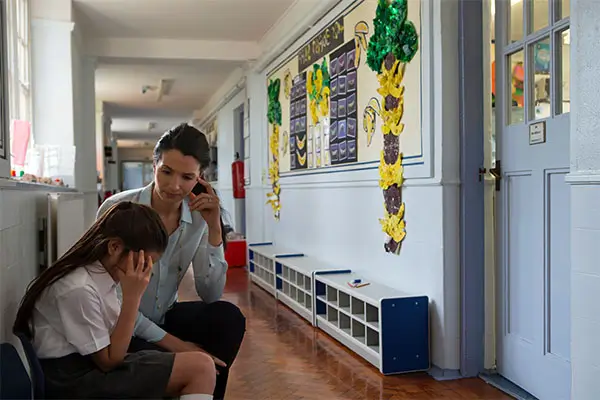
De-escalation training for k-12 staff
Effective de-escalation can help lead to...
Shorter behavioral incidents
A situation calmed quickly keeps students in learning, spares neighboring classrooms the disruption, and frees the staff member from managing the moment long after it should have settled.
Less disruption across the building
Bringing a situation down before the room has to be cleared lets learning continue and keeps other staff from being pulled in to help move students.
Fewer calls for administrator assistance
Handling escalation at the classroom level means fewer calls go out for support — and administrators spend less of the day responding to behavior across the building.
TEACHER SAFETY PRO
Safety training for teachers
Less Disruption to the entire building
When situations are resolved quickly, neighboring classrooms are less likely to be interrupted, and students are less likely to be moved out of their own rooms.
Reduction of property destruction
Quick resolution keeps theDe-escalated situations are less likely to reach the point where rooms, materials, and electronic devices are damaged.
Lower risk of staff injury
Bringing a situation down early can keep it from escalating to where a staff needs to physically intervene.

CRISIS INTERVENTION PRO
Restraint training for K-12 staff
Shorter behavioral incidents
A situation calmed quickly keeps students in learning, spares neighboring classrooms the disruption, and frees the staff member from managing the moment long after it should have settled.
Less disruption across the building
Bringing a situation down before the room has to be cleared lets learning continue and keeps other staff from being pulled in to help move students.
Fewer calls for administrator assistance
Handling escalation at the classroom level means fewer calls go out for support — and administrators spend less of the day responding to behavior across the building.
SINCE 2002
Some of the organizations
we've worked with
Needham Public Schools
Longmeadow Schools
St. Michael's Academy
Postive Behavior Supports
ServiceNet
J.S. Bryant School
The Valley West School
Springfield Prep Charter
Petersham Public Schools
East Longmeadow Schools
Pathfinder Vocational
Ludlow Public Schools
Veritas Prep Charter
Central MA Collaborative
Embracing The Creative Child
Belchertown Schools
Orange Public Schools
Worcester Schools Busing
Ralph Mahar Regional
Hampshire Regional Schools